
Quantum Space is a space defense and orbital mobility company headquartered in Rockville, Maryland. The company builds Scout and Ranger, a matched set of maneuverable spacecraft engineered to operate across every orbit, from low Earth orbit to geostationary and cislunar space. These refuelable spacecraft support space domain awareness, satellite servicing, satellite life extension and on-orbit refueling for national security, civil and commercial customers. Quantum Space works with government and commercial operators to field responsive, resilient capabilities across the full spectrum of space operations.
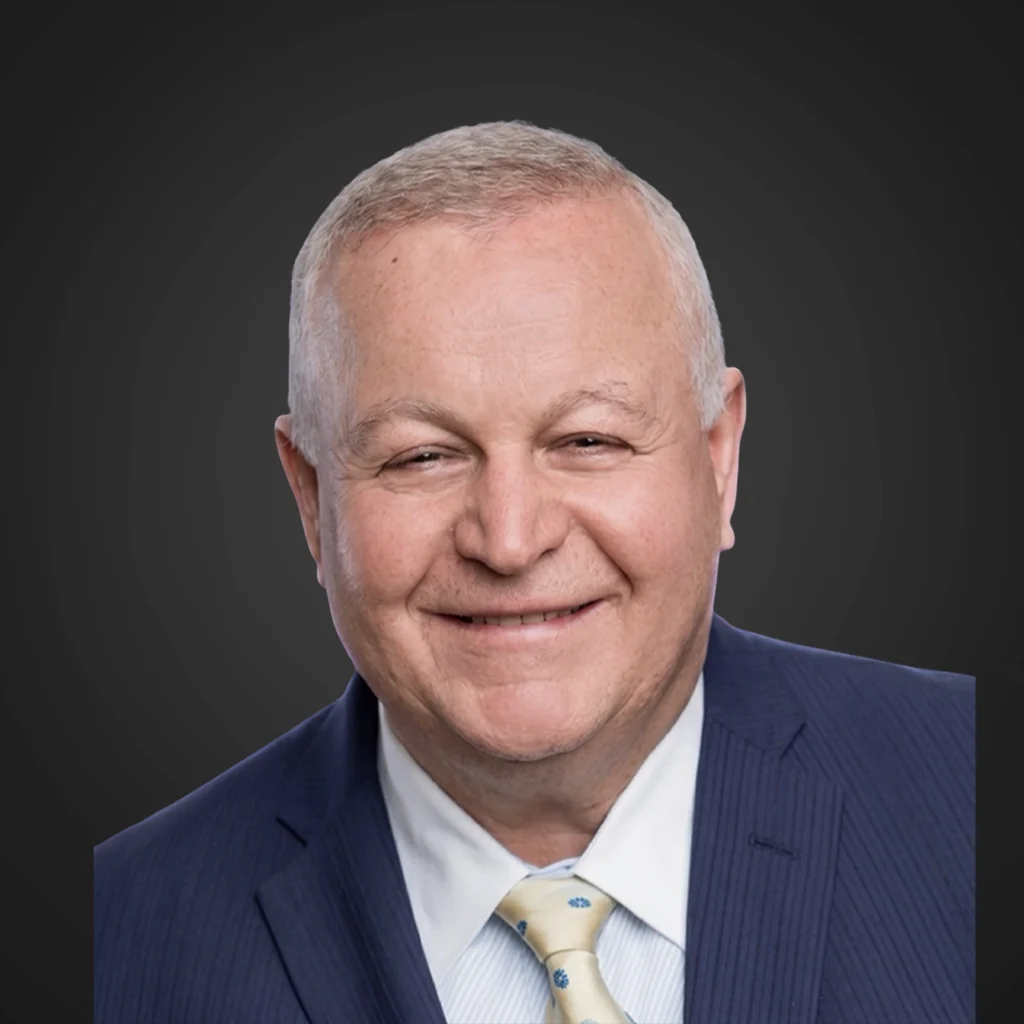
Dr. Kam Ghaffarian
Co-Founder and Executive Chairman of Quantum Space, and a visionary entrepreneur who has founded leading companies across space, energy, and advanced technology, including Axiom Space, Intuitive Machines, X-energy, and IBX. Has successfully taken three companies public, bringing a proven track record of building and scaling businesses, driving innovation, and creating long-term value.
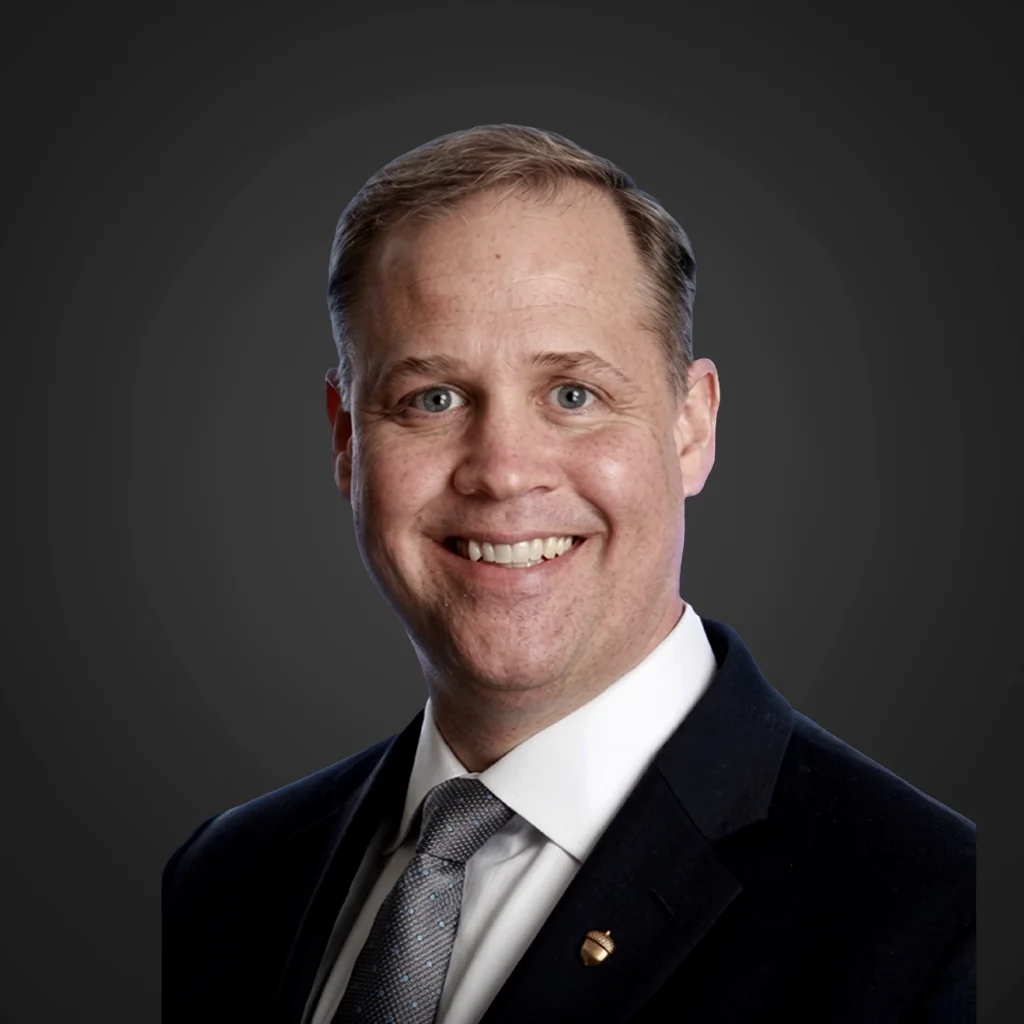
Jim Bridenstine
Former NASA Administrator, U.S. Congressman, and U.S. Naval Aviator who established NASA’s Artemis program and expanded commercial space partnerships. As a member of the House Armed Services Committee, helped advance the creation of the U.S. Space Force and shape America's national security space priorities.

Kerry Wisnosky
Aerospace industry veteran with 35 years of experience in space and defense. Co-founder of Millennium Engineering and Integration, which later became part of Astrion, with a track record of building and leading aerospace and defense organizations, including at Raytheon/Hughes JV and General Electric.

Ben Reed
Former NASA executive with 22 years at Goddard Space Flight Center, including leadership of the Exploration and In-Space Services Division and work on three Hubble Space Telescope servicing missions. Served as Director of Civil Space Policy at the White House National Space Council.

Phil Bracken
Aerospace engineering leader with nearly two decades of experience at Blue Origin and Orbital ATK. Specializes in advanced spacecraft systems, propulsion technologies, and engineering development.

Adarsh Parekh
Finance executive with more than 25 years of experience in financial operations, capital markets, and strategic transactions. Brings extensive experience in public-company financial leadership, major acquisitions, and growth across the aerospace and technology sectors.

Patrick Monaghan
Legal executive and U.S. Navy veteran with extensive experience in corporate governance, public markets, and technology transactions. Previously served as a naval intelligence officer and has built and led legal teams for global organizations.

Bettina Inclán-Agen
Strategic communications and marketing executive with more than 20 years of experience advising leading brands and working at the highest levels of government, including as NASA’s Associate Administrator for Communications. Led communications for Axiom Space, including spearheading public engagement efforts during the first two private astronaut missions to the International Space Station.

Blake Ranney
Human resources executive with extensive experience scaling high-growth organizations and developing talent strategies. Helped grow a startup into a multibillion-dollar company while building high-performing teams and maintaining a strong organizational culture.

Sue Hall
Aerospace executive and U.S. Air Force veteran with more than 30 years of experience leading complex space and defense programs. Co-founder of Millennium Engineering and Integration, with expertise in engineering, operations, mission assurance, and organizational leadership across aerospace and defense industries.

Richard Matlock
National security and missile defense executive with more than 40 years of experience at the U.S. Department of Defense. Former Missile Defense Agency Program Executive for Advanced Technology and Director of Special Programs for Missile Defense, leading advanced missile tracking, interception, and space-based defense initiatives.
American made space.
Three locations, three purposes. Quantum Space Headquarters in the DC corridor. Manufacturing adjacent to Space Systems Command. Production facility in Tulsa, OK.
operations.


Quantum Space, answered
The questions we hear most about the maneuver-first spacecraft platform: its propulsion, its endurance, and who it serves.
Quantum Space is building the next generation of advanced maneuverable spacecraft for national security, civil and commercial space operations. Its mission is to give the space domain freedom to maneuver, replacing fixed, predictable satellite architectures with resilient space architecture built for a contested domain. Headquartered in Rockville, Maryland, with facilities in Hawthorne, California and in Tulsa, Oklahoma. Quantum Space is led by a team with deep national security and space industry experience, including CEO Jim Bridenstine, former NASA Administrator, Executive Chairman Kam Ghaffarian, and President Kerry Wisnosky. Quantum Space’s approach supports the U.S. Space Force's Theory of Competitive Endurance: avoiding operational surprise, denying first-mover advantage, and enabling counter-space campaigning. They have attracted a diverse customer base that spans the full breadth of the U.S. national security space enterprise. Quantum Space has contracts and pending proposals with the U.S. Space Force, the Department of War, NASA, and the Air Force Research Laboratory and has identified a pipeline of additional opportunities with an estimated value of more than $7.5 billion across the national security, civil, and commercial space markets. Anchoring this portfolio is the Company’s contract award under the U.S. Space Force's flagship Andromeda program, an IDIQ vehicle with a ceiling value of $6.2 billion aimed at fielding a proliferated constellation of maneuverable, refuellable spacecraft in GEO.
Space is no longer a benign operating environment. America's adversaries have developed the capability to surveil, target, and threaten fixed satellites in predictable orbits. A space architecture of large, costly, concentrated assets in known positions is a strategic liability. Maneuverable spacecraft aim to solve this problem. They operate across multiple orbits, deny adversaries a decisive first strike, and provide freedom of maneuver in contested space domains. This is why the Space Force's budget for space defense has grown significantly. Maneuverability is not optional; it is operationally essential.
Quantum Space's spacecraft are focused on providing customers with the freedom to maneuver, designed for in-space mobility, to operate, reposition, and refuel in orbit. With two spacecraft platforms, Scout and Ranger, that share this same core capability set at different scales, Quantum Space provides customers with the freedom to maneuver for national security, civil, and commercial missions. Both platforms are designed for long-endurance operations, enabling rapid, responsive maneuvering as well as high-efficiency sustained operations. Ranger is engineered to operate across Low Earth Orbit, Medium Earth Orbit, Geostationary Orbit, and cislunar space; Scout will deliver this same maneuverability and refueling capability in a compact, rapidly deployable ESPA Grande form factor. Both are designed to be refuelable on orbit, extending mission life well beyond a single tank of fuel.
Scout is a compact, ESPA Grande-class spacecraft engineered for high-performance maneuverability in a rapidly deployable platform. It is designed around a patented, high mass-fraction, space-storable, multi-mode propulsion system that delivers sustained maneuver freedom for missions requiring dynamic, persistent movement. Scout is designed to be refuelable in orbit, extending its working life beyond a single tank of fuel. As the anchor vehicle of Quantum Space's fleet, Scout brings the same maneuverability and refueling philosophy as Ranger to a smaller, faster-to-deploy form factor.
Representative mission areas include space domain awareness, reconnaissance, remote sensing, communications, and space-weather or data-collection missions. The primary initial customer is the national-security community, while the architecture also supports commercial and civil payload customers.
Ranger is Quantum Space’s highly maneuverable, refuelable spacecraft designed for sustained maneuver, extended mission life, and operational flexibility across multiple orbits. As a larger mobility and logistics platform, Ranger is engineered with substantial propellant and payload capacity to support orbital transportation, fuel-depot operations, on-orbit refueling, hosted payloads, satellite servicing, and life extension. Designed for national security, civil, and commercial missions, Ranger is intended to operate from low-Earth orbit through geostationary orbit and into cislunar space.
The Ranger spacecraft will carry up to 4,000 kg of storable propellant. This exceptional fuel capacity is the highest in its class and directly enables Ranger's unique capability. The extra propellant will deliver the delta-V margin required to maneuver between orbits, from LEO to MEO to GEO to cislunar space in a single vehicle. This multi-orbit reach, sustained by high fuel capacity, translates to freedom of action: the ability to reach any orbit, anytime.
Ranger's refuelable, modular architecture is designed to host large, high-power payloads capable of supporting operationally meaningful mission loads. Beyond hosting, Ranger is engineered to serve as an orbital transfer vehicle, repositioning and delivering payloads across orbital regimes, or as a fuel depot, storing and delivering propellant to other spacecraft on orbit. This modularity allows a single Ranger platform to be reconfigured for multiple mission roles over its operational life, rather than built for one fixed purpose.
Quantum Space's Scout and Ranger are engineered for on-orbit refueling, the ability to both receive and transfer propellant while operating in space, giving users operational freedom and mission endurance. Ranger is designed as both a receiver, extending its own mission life through sustained maneuver, and a provider, refueling other spacecraft as part of Quantum Space's broader approach to space logistics. Refueling turns spacecraft from fixed, fuel-limited assets into enduring, persistent platforms built for a dynamic space domain.
Build the next era of American spaceflight.
Hiring across propulsion, avionics, mission operations, software, and business development. Cleared roles available. We move fast and we ship.
